At CONVERGIX, we design and implement material joining solutions that guarantee your products' durability and reliability. By leveraging our extensive industry experience, we select the optimal joining method for each application, creating assembly processes that enhance strength, efficiency, and quality, all while reducing waste and costs.
Material Joining Solutions Welding, Fastening, & Dispensing Technology
Welding, Fastening, & Dispensing Technology


Challenge
Material Joining: Process Selection & Quality Consistency
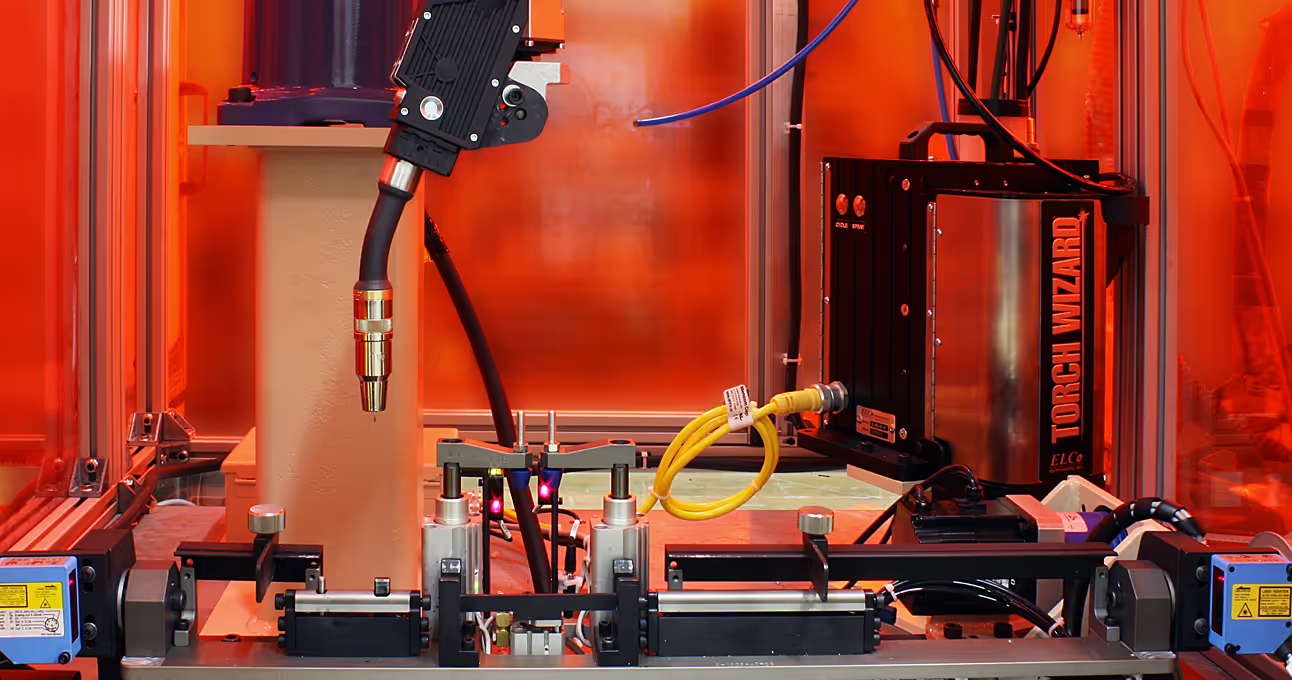
Using the wrong joining method can reduce product durability, raise production costs, and cause quality control problems. Manufacturers frequently face joint failures, inconsistent bond strength, and material compatibility issues, resulting in rework and warranty claims. Lacking expertise makes it hard to balance speed, strength, and cost, or to choose the best method—welding, fastening, dispensing, or pressing—for each application.
Solution
Engineered Material Joining: Optimization & Quality Assurance
CONVERGIX designs systems that consistently create strong, reliable bonds. We analyze your materials, production requirements, and quality standards to engineer solutions that enhance joint strength, reduce cycle times, and deliver consistent results. With expertise across multiple joining technologies, we recommend the best method or combination for your application.

Capabilities
Material Joining
Solutions & Technologies
Material Joints
Precision Welding Technologies
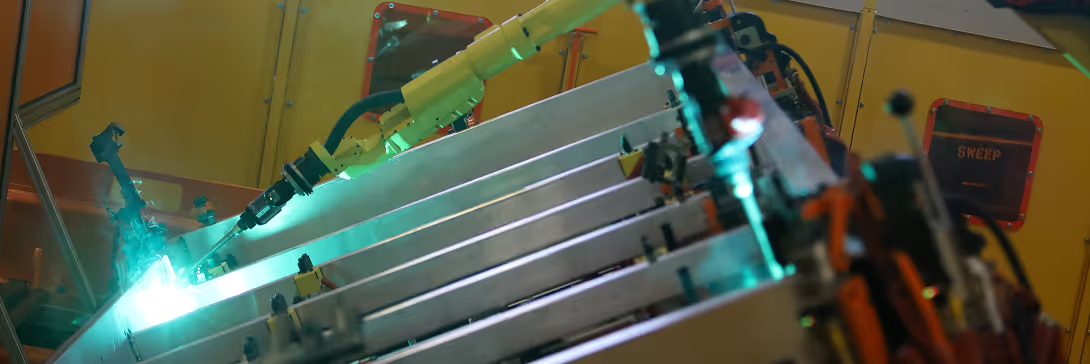
Our welding capabilities deliver controlled, repeatable joints for metals, plastics, and dissimilar materials, tailored to your production requirements and quality specifications. Options include laser welding for concentrated heat and minimal distortion, friction and spin welding for solid-state joints without filler materials, and complete robotic weld cells for high-volume automation.
Laser Welding Systems
Laser welding uses focused laser energy to melt parent materials with exceptional control, resulting in minimal heat transfer to surrounding areas and fixturing. The wavelength is optimized based on your materials, and we can introduce alloying wire for dissimilar metal applications like steel and cast iron.
Friction & Spin Welding
For applications requiring watertight seals or joining incompatible materials, friction welding generates heat through controlled rotation rather than external fuel sources. Our systems integrate IndraMotion MLD motion logic control, IndraDrive servo drives with onboard safety, synchronous servo motors with absolute Hiperface encoders, SERCOS III Ethernet communication, and durable Ball Screw and Ball Rail® assemblies.
Robotic Weld Cells
We design complete robotic weld cells integrating leading platforms, including FANUC, Yaskawa Motoman, Denso, ABB, and KUKA. We configure systems with resistance welding, plasma welding, ultrasonic welding, and soldering capabilities to meet precision manufacturing standards.
Fastening & Forming Systems
Mechanical Joining Processes
For applications requiring added materials or mechanical compression, we engineer fastening and forming systems that ensure consistent, verifiable joints. Our solutions range from simple screw driving to complex sequential torque patterns with integrated quality verification.
Fastening Systems
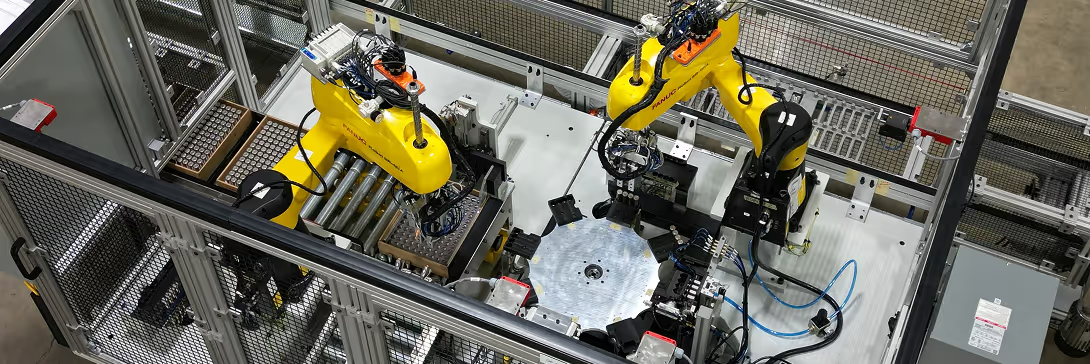
From single fasteners to complex sequential patterns, we design stations that are fully automated with advanced robotics or operator-assisted for flexibility. We incorporate 3D prototyping for validation and real-time verification tools to confirm every fastening meets design requirements. Our expertise includes:
- Low and high pressure riveting operations
- Orbit riveting and forming solutions
- Hard staking and heat stake of plastic components
- Ultrasonic welding for thermoplastic assembly
- DC and servo screw driving with torque monitoring
- Nut driving operations with thread verification
- Pneumatic hand tools for operator-assisted assembly
Pressing Technology
Our pressing systems range from hydro-pneumatic devices for simple clamping to advanced hydraulic and electro-mechanical platforms with precise force control. We integrate CMM verification tools and signature analysis to ensure dimensional accuracy and joint integrity. Capabilities include:
- Force monitoring and distance confirmation
- Press to stall with automatic detection
- In-process control, monitoring, and adjustment
- Signature analysis for quality validation
- Assembly monitoring with traceability recording
Swaging Operations
Swaging fits parts together and expands them to create secure joints without adding materials. We've standardized this process since 1988, as this proven method delivers consistent ballizing results for automotive and industrial applications.
- Precision ballizing for camshaft production
- Over 60 million camshafts produced using our machines
- Repeatable processes refined over three decades
- Material-efficient joining with no filler requirements
- Adaptable systems for custom project needs
Dispensing Systems
Inspection Technologies
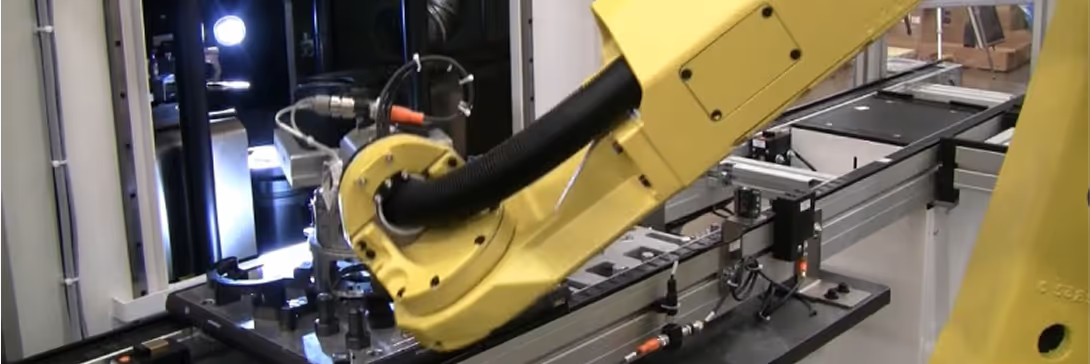
Whether measuring final products or applying materials during assembly, our dispensing technology provides precise, repeatable results. We design systems for pharmaceuticals, packaging, and manufacturing—integrating validation through laser and vision inspection.
High-Speed Dispensing
Our high-speed capabilities handle challenging materials including Betabrate, Butyl epoxy, and two-part mixtures requiring precise combination before application. Capabilities include:
- Programmable and fixed displacement systems
- Feed and weigh operations for powders and pellets
- Liquid dispensing for adhesives, sealants, and lubricants
- High-speed applications with real-time monitoring
- Validation through laser and vision inspection systems
Benefits
What Material Joining Systems Deliver

Superior Joint Integrity
Stronger, more reliable bonds with consistent quality.

Reduced Production Costs
Minimized waste, rework, and material consumption.

Enhanced Process Control
Improved traceability, validation, and quality assurance.
Discover what CONVERGIX can engineer for your workflow.

Robotics
Enhance speed, precision, and flexibility in your operations by integrating advanced robotics purpose-built for complex assembly tasks.

Automation & Controls
Modernize your control environment with upgraded PLC/DCS hardware and optimization strategies that strengthen digital performance.

Material Removal
Enhance part quality and production efficiency with automated deburring, drilling, and machining solutions that streamline throughput and deliver consistent, high-precision results.